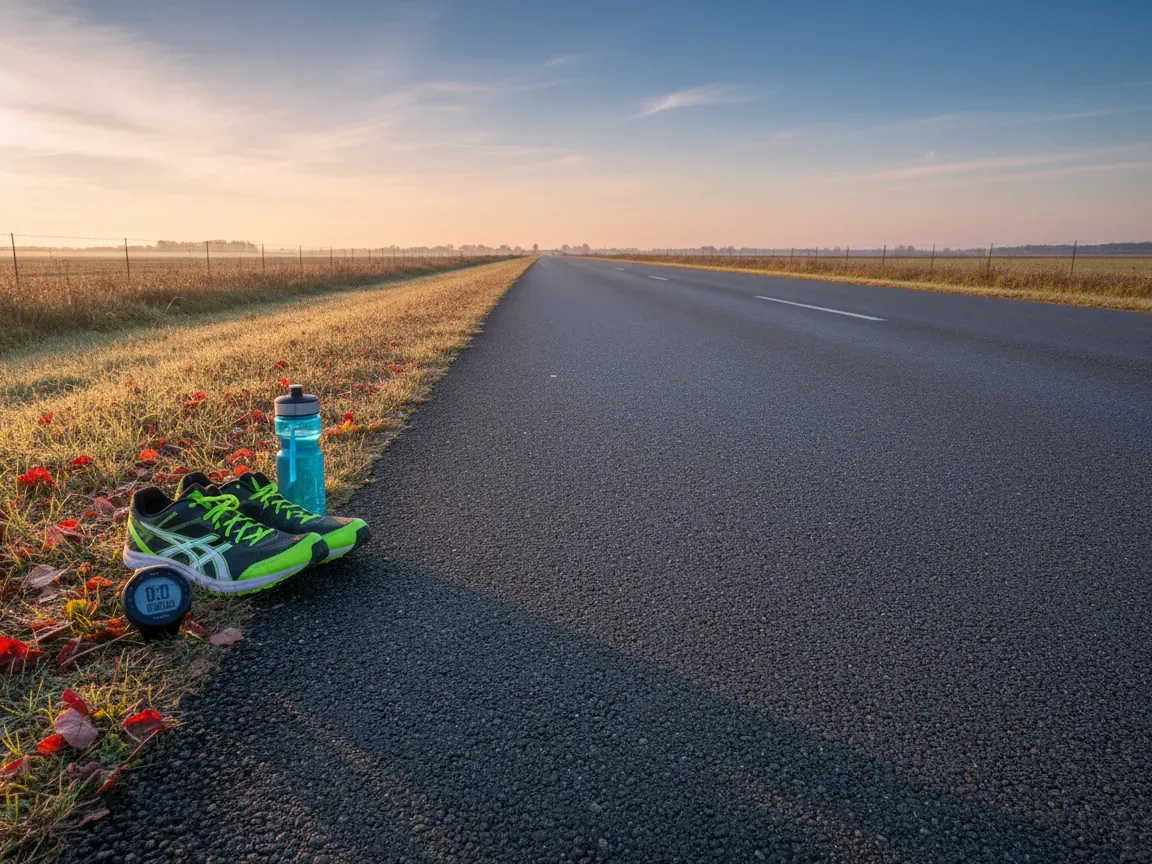
Securing a personal record or qualifying for the Boston Marathon requires months of disciplined training, but course selection often dictates whether you hit your goal time. Running an identical physiological effort on a rolling course versus a pancake-flat route can produce a finish time discrepancy of several minutes. If you want to maximize your training, choosing a race engineered for raw speed is the smartest strategic move you can make.
What Makes a Marathon Course Fast?
A fast marathon course comes down to a few measurable variables: total elevation change, the frequency of turns, and road surface quality. Every sharp turn forces a runner to decelerate, adjust stride cadence, and re-accelerate, which drains glycogen reserves faster than locking into an uninterrupted rhythm. Long straightaways allow you to establish a consistent running economy early and hold it without metabolic spikes.
Environmental stability plays an equally crucial role. Predictable race-day weather, specifically start-line temperatures between 40 and 50 degrees Fahrenheit, prevents premature cardiac drift and overheating. Beyond the profile, logistics matter. Races with organized wave starts and wide roadways prevent early congestion, letting you hit your target pace immediately rather than weaving through crowds for the first three miles.
Major World Records: Flat Giants of the Racing World
When runners look for proven speed on an international stage, two World Marathon Majors consistently dominate the conversation.
- Berlin Marathon: Known globally as the premier venue for world records, Berlin features negligible elevation change, pristine asphalt, and smooth, sweeping turns that preserve momentum from start to finish.
- Chicago Marathon: Renowned for its dead-flat profile through 29 diverse neighborhoods, Chicago offers elite-level organization, wide boulevards, and dense crowd energy that sustains mental focus deep into the final 10 kilometers.
- Rotterdam Marathon: A European favorite for fast times, this race offers sea-level running, mild spring weather, and a fiercely competitive field focused purely on performance.
- Valencia Marathon: Held in early December, Valencia has surged in popularity thanks to optimal coastal temperatures, exceptionally flat pavement, and a deep field of runners chasing BQ standards.
Top US Contenders: High BQ Rates and Pancake-Flat Roads
Domestic runners hunting for a Boston qualifier do not necessarily need a major lottery entry. Several mid-sized US races deliver exceptionally high BQ rates thanks to flat topology and ideal autumn and winter climates.
- Indianapolis Monumental Marathon: Held in early November, this course winds through downtown Indianapolis with minimal elevation shifts, cool Midwestern morning air, and wide lanes that eliminate bottlenecking.
- Houston Marathon: Running in January provides reliable cool temperatures, and the virtually non-existent elevation makes it one of the most reliable winter platforms for chasing a standard.
- Grandma’s Marathon: Tracing the scenic North Shore of Lake Superior into Duluth, Minnesota, this point-to-point race combines minor rolling terrain with a steady net downhill and cool coastal breezes.
- Philadelphia Marathon: While it features modest undulations in the middle miles, the long, flat stretches along the Schuylkill River create an outstanding venue for negative splits late in the race.
Downhill Flyers: Net Drop Courses That Deliver Speed
Net downhill courses use gravity to increase stride rate and reduce the cardiovascular demand of fast pacing. These races carry substantial elevation losses from start to finish, yielding remarkable finishing times for prepared legs.
- St. George Marathon: Located in Utah, this iconic event descends nearly 2,600 feet from start to finish, rewarding runners who can manage quad fatigue through the downhill segments.
- Revel Mt Charleston: Dropping over 5,000 feet outside Las Vegas, this point-to-point course offers extreme downhill assistance, producing some of the highest qualifying percentages in North America.
To convert a net downhill profile into an official qualifying mark rather than a muscle injury, your training must include eccentric strength work. Without targeted downhill tempo efforts in your training block, the sustained eccentric loading on your quadriceps will cause severe cramping and pace collapse by mile 20.
How to Pick the Best PR Marathon for Your Running Style?
Not every fast runner thrives on the exact same course layout. Selecting the best event requires an honest appraisal of how your body handles race dynamics, course architecture, and environmental conditions.
If you struggle with race-day pacing discipline, extreme downhill courses can be dangerous. Going out ten seconds per mile faster than target pace on an aggressive decline will trash your legs before the halfway mark. In that case, a table-flat city route like Indianapolis or Chicago provides the rhythmic predictability you need to stay on track.
Conversely, if you excel at open road running and find urban turns or dense spectator noise mentally overwhelming, point-to-point rural or coastal routes are superior choices. Review historical weather charts for humidity spikes and wind patterns, particularly headwind risks on coastal or lakefront stretches, before finalizing your entry.
Preparing Your Final Plan for a Personal Record and BQ
A successful qualifying campaign requires early race registration and precise logistical planning. Popular fast marathons with high BQ percentages often sell out months in advance or utilize strict capacity caps to keep the race corridors uncongested. Securing your bib early allows you to build your sixteen-to-twenty-week training cycle around the specific elevation profile of your target event.
Align your peak long runs with the expected conditions of your chosen destination. If you pick a race with cool morning starts and long straight stretches, simulate those variables in your training sessions so your body is accustomed to the pace and temperature.
The Strategy Behind Turning Speed into Success
A flat course profile removes the physical obstacles of steep climbs, but it still requires calculated execution on race day. The absence of hills means your muscles work through an identical range of motion for hours without variation. Building your mileage on surfaces that mimic your target course guarantees your connective tissue can handle the sustained, repetitive impact.
The road to a personal record or a Boston bib is won by matching your physiological strengths to the right topography. When disciplined training aligns with smart course selection, predictable weather, and conservative early pacing, you give yourself the highest statistical probability of crossing the finish line with your fastest time yet.