Heel pain can stop your training block in its tracks if you ignore the warning signs. Plantar fasciitis remains one of the most frustrating overuse injuries for distance runners, often showing up unexpectedly during peak mileage weeks. Instead of sitting completely idle on the couch for weeks, understanding how to manage the load on your feet allows you to recover faster and maintain your hard-earned aerobic fitness.
What Causes Plantar Fasciitis in Runners?
The plantar fascia is a thick band of connective tissue running along the bottom of your foot, connecting your heel bone to your toes. Its primary job is absorbing shock and supporting the arch of your foot every time you land. When training loads increase too quickly, this tissue experiences repetitive micro-tears and inflammation near its attachment point at the heel.
Several mechanical and behavioral triggers commonly cause this breakdown:
- Rapid spikes in weekly mileage or sudden hill workouts without enough adaptation time.
- Running on stiff, unforgiving surfaces like concrete sidewalks instead of dirt trails or rubberized tracks.
- Tight calves and stiff Achilles tendons that pull hard on the bottom of the foot during push-off.
- Weak intrinsic foot muscles that fail to support your arch under sustained load.
- Logging high mileage in worn-out running shoes that have lost structural integrity.
Morning Heel Pain Versus Common Muscle Soreness
Telling the difference between normal post-workout soreness and actual plantar fasciitis is simple once you know what to track. Standard muscle soreness usually peaks around forty-eight hours after a tough workout, feels dull and diffuse, and improves quickly as your body warms up during an easy jog.
Plantar fasciitis behaves differently. Its hallmark symptom is a sharp, stabbing pain under the inside edge of your heel with your very first steps out of bed. During the night, the fascia contracts into a shortened position. When you stand up, your body weight abruptly forces the tissue to stretch, triggering an immediate pain response. While the pain might dull after ten minutes of walking, it often returns later in the day after long periods of sitting at a desk.
Can You Keep Running with Plantar Fasciitis?
Total rest is rarely the best solution for tendon and fascia injuries. Complete inactivity causes the tissue to lose its load tolerance, making it even more fragile once you return to regular training. In many cases, you can continue running on a modified schedule if your symptoms remain within a safe threshold.
Follow the traffic light rule to evaluate your daily pain on a scale from zero to ten:
- Safe zone (0 to 3): Mild stiffness or a faint ache that disappears within the first mile of running and does not linger the next morning. You may continue low-intensity training.
- Caution zone (4 to 5): Moderate pain that alters your running form or increases as the run progresses. You should immediately reduce mileage, drop speed work, and avoid steep hills.
- Danger zone (6 to 10): Sharp, limping pain that persists during daily walking and throbs throughout the day. Stop running entirely and switch to zero-impact cross-training like swimming or stationary cycling.
Active Recovery Exercises That Actually Speed Up Healing
Passive treatments like rolling your foot on a frozen water bottle provide temporary relief, but they do not rebuild tissue strength. Active loading exercises remodel the fascia and fortify the calf muscles, ensuring your feet can handle ground impact forces again.
Focus on these foundational movements:
- High-load heel raises: Stand on the edge of a step with a rolled towel under your toes to pre-stretch the plantar fascia. Rise up on both feet for three seconds, pause at the top, and lower slowly on the injured foot for three seconds.
- Seated toe curls: Place a hand towel flat on a smooth floor and use your toes to scrunch the fabric toward your heel to wake up the deep arch stabilizers.
- Bent-knee soleus wall stretches: Keep your back knee slightly bent while pushing your hips forward against a wall to isolate the lower calf, which directly affects heel tension.
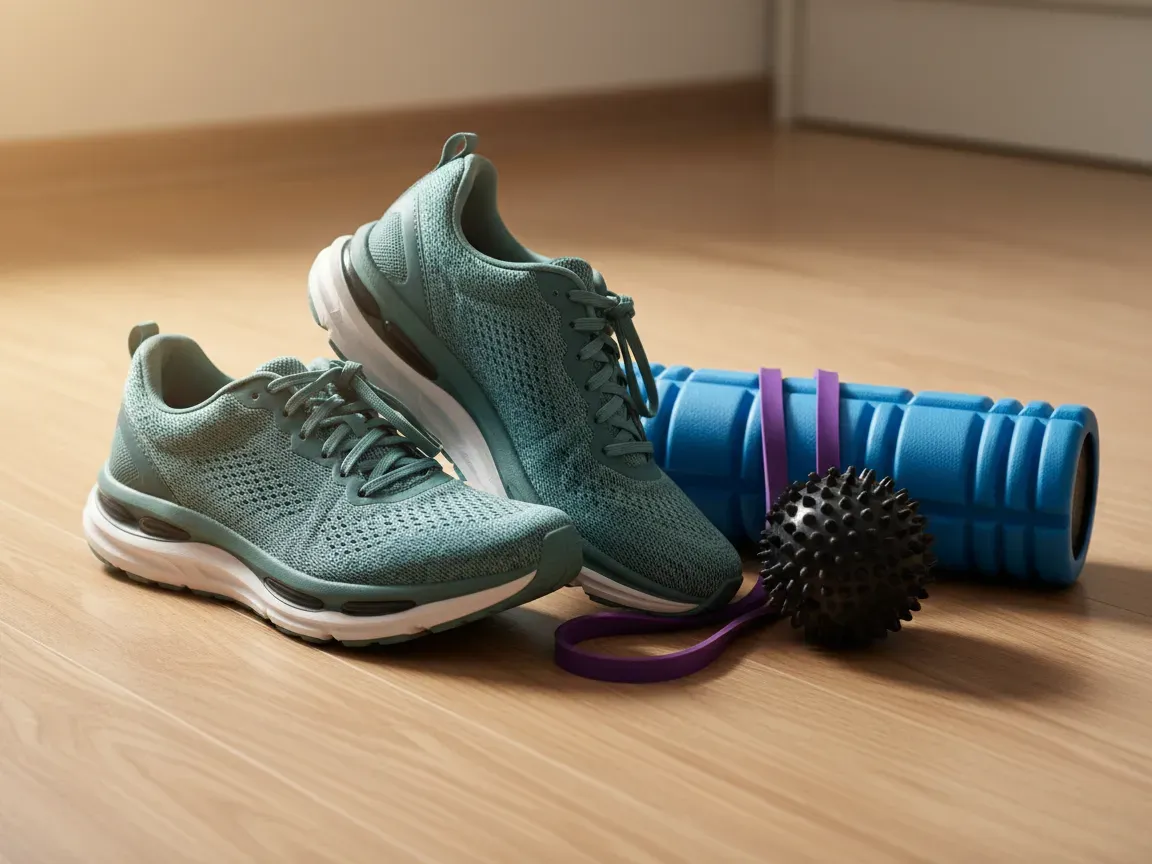
- Deep calf foam rolling: Spend two to three minutes rolling the meaty section of your gastrocnemius and soleus muscles to release tightness before walking or running.
Footwear and Arch Support Adjustments That Relieve Tension
Your footwear choices throughout the entire day make a massive difference in how quickly your heel heals. Walking barefoot around your house on hardwood or tile floors puts high tensile stress on an irritated fascia band.
Switching to running shoes with a moderate heel-to-toe drop (between eight and twelve millimeters) naturally reduces the mechanical strain placed on your Achilles and arch. If your current shoes have over four hundred miles on them, the midsole foam has likely compressed, transferring more impact force to your feet. Temporary over-the-counter orthotics or firm arch inserts can distribute ground pressure evenly across your midfoot while the tissue recovers. At home, wear supportive recovery slides instead of walking barefoot.
When Should You See a Doctor for Persistent Heel Pain?
Most cases of plantar fasciitis improve with consistent cross-training, footwear updates, and focused calf strengthening. However, pushing through unchecked heel pain can lead to chronic plantar fasciosis, which involves permanent degenerative tissue changes.
Schedule an evaluation with a sports medicine physician or physical therapist if you notice any of these signs:
- Pain that does not improve after three to four weeks of conservative home care and reduced mileage.
- Noticeable swelling, warmth, or redness around the heel bone.
- Numbness, tingling, or burning sensations radiating into your toes, which may point to nerve entrapment.
- Constant, deep aching in the heel at night while you are resting in bed.
- Sharp, pinpoint bone pain, which could indicate a calcaneal stress fracture rather than soft tissue inflammation.
Smart Daily Habits to Keep Heel Pain from Coming Back
Once your heel pain subsides, keeping it away requires proactive daily care. Preventative habits take only a few minutes a day and easily integrate into your standard warmup and cooldown routines.
Start by gently flexing your toes upward with your hand before stepping out of bed each morning to prep the fascia for weight-bearing. Replace your running shoes every three hundred to five hundred miles depending on your body weight and surface preferences. Avoid abrupt spikes in volume by adhering to gradual progression rules, increasing total weekly mileage by no more than ten percent at a time. Finally, continue doing heavy, slow heel raises once or twice a week as part of your regular strength training program.
Finding the Balance Between Rest and Progress
Rehabbing plantar fasciitis does not require you to abandon your fitness goals. Managing tissue load with smart exercise selection and temporary training adjustments allows your foot to heal while remaining strong enough to handle regular running.
Pay close attention to how your heel feels during morning steps, as that response is your best indicator of whether the previous day’s load was appropriate. By staying patient, addressing weak spots in your kinetic chain, and respecting your symptom thresholds, you will return to high-mileage weeks with stronger, more resilient feet.