Running economy depends heavily on what happens between your ribs and your thighs. When runners hit a performance plateau or battle nagging back tightness, they often look at footwear or weekly mileage first. Yet the primary culprit is frequently sitting right in the front of the pelvis: weak, inactive hip flexors.
Building strength in these muscles changes how your feet strike the pavement, restores natural pelvic tilt, and keeps your stride snappy across long distances.
Why Hip Flexors Drive Running Performance?
Every stride cycle requires rapid hip flexion to pull your trailing leg forward and prepare for the next ground strike. When your hip flexors lack strength, your body compensates by overusing the lower back or tilting the pelvis forward into an excessive anterior tilt. This mechanical breakdown reduces your forward drive and places unwanted torque on your hamstrings.
A strong hip complex acts as the central anchor for running mechanics. By strengthening the psoas and rectus femoris, you create a stable platform that allows your glutes to fire properly on the opposite side. The result is better cadence, a cleaner knee drive, and far less impact rattling up your spine during high-mileage blocks.
Standing Banded Psoas March for Knee Drive
The standing banded march trains hip flexion against resistance in a position that directly mirrors running posture. It teaches the psoas to initiate the movement while challenging your stance leg to remain completely stable.
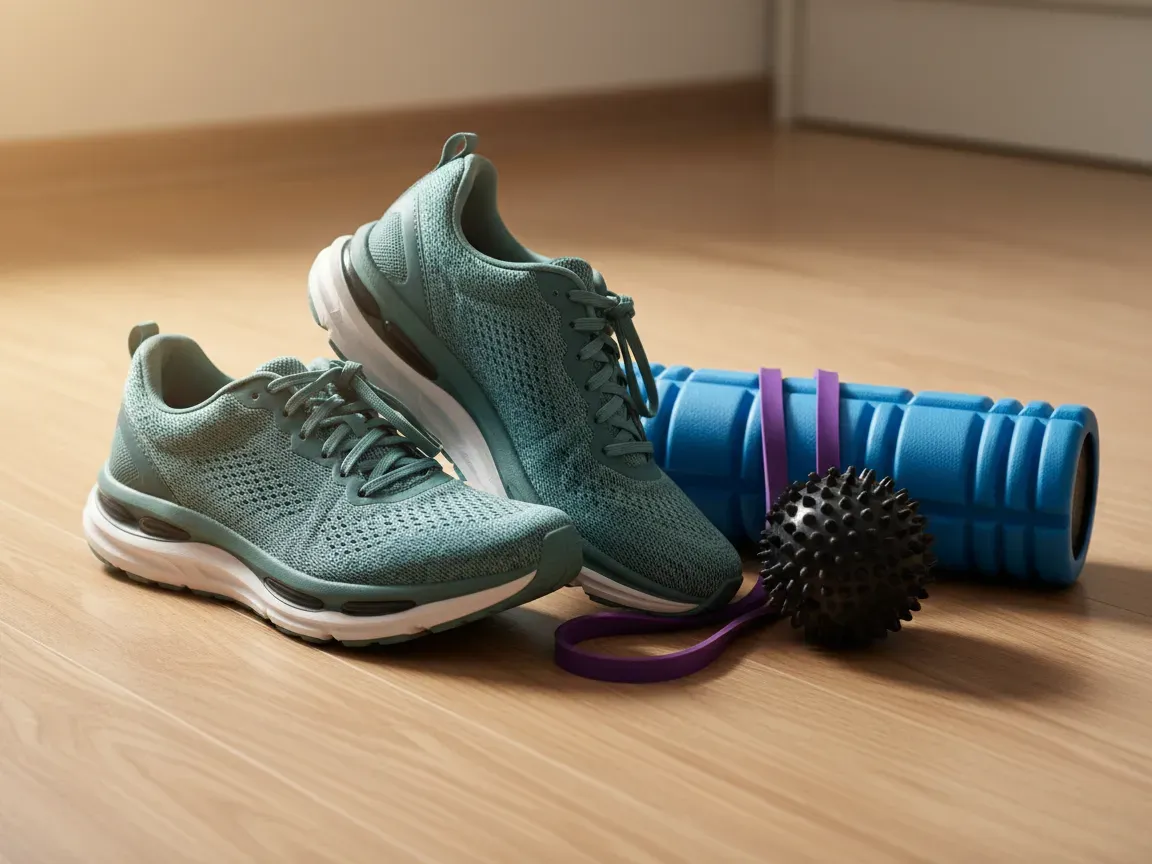
- Loop a light resistance band around the arches of both feet.
- Stand tall with your feet hip-width apart and your core braced.
- Drive one knee upward toward hip height, keeping your foot flexed up toward your shin.
- Hold the top position for two seconds, keeping your standing glute locked.
- Lower slowly under control and alternate sides for 10 to 12 repetitions per leg.
Focus on maintaining an upright torso without leaning back as the knee rises. If your lower back arches, switch to a lighter band to maintain proper pelvic position.
Bulgarian Split Squat for Unilateral Power
While primarily known as a quad and glute builder, the Bulgarian split squat forces the hip flexor of the rear leg into an active, loaded stretch while the front leg works unilaterally.
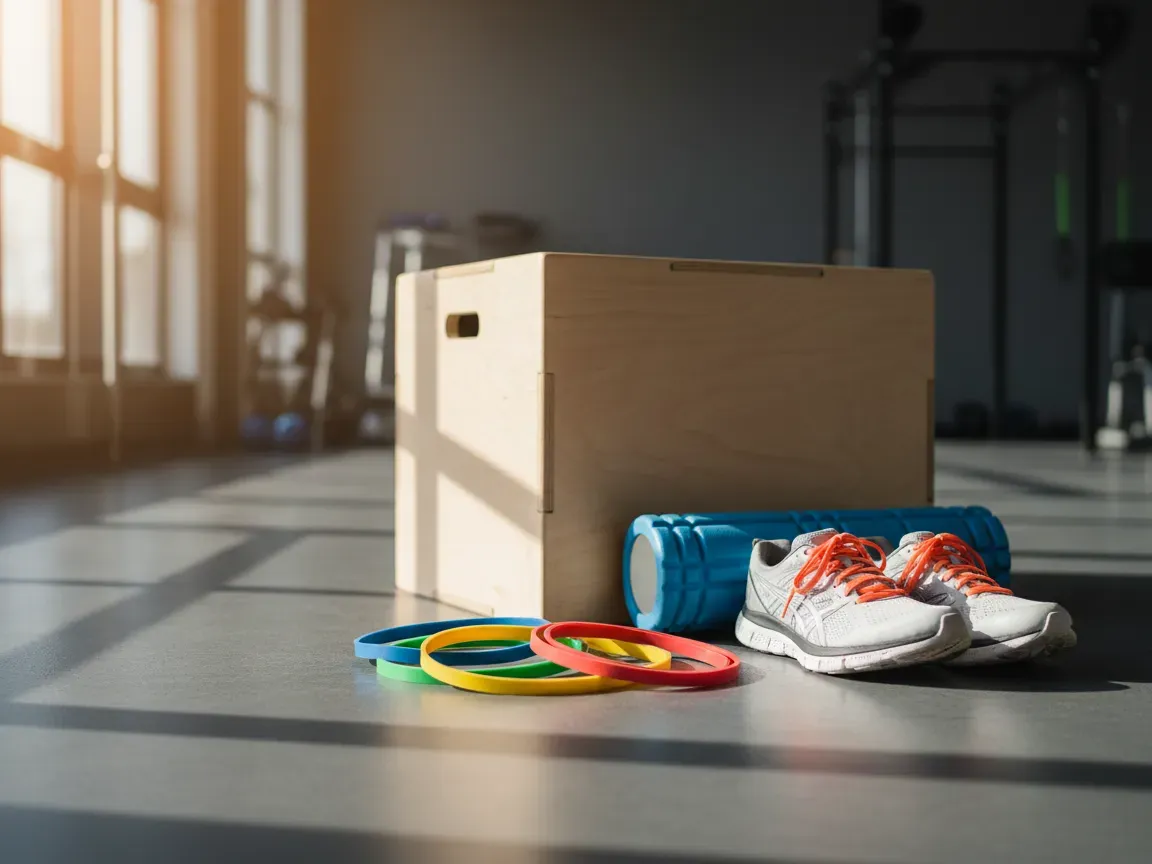
- Stand two feet in front of a flat bench or sturdy box.
- Place the top of your rear foot onto the surface behind you.
- Lower your hips straight down until your front thigh is nearly parallel to the floor.
- Keep your torso tall to open up the hip flexor of the rear leg.
- Push through your front heel to return to the starting position.
Complete 8 to 10 repetitions per side. This unilateral movement corrects power imbalances between your left and right sides that usually go unnoticed during normal runs.
Isometric Wall Drive to Build Core Stability
Isometric holds develop muscular endurance, which is crucial for maintaining your running form when fatigue sets in during the final miles of a workout.
- Face a wall and place your hands flat against it at chest height.
- Lean forward at a 45-degree angle, maintaining a rigid, straight line from head to heels.
- Drive your right knee up toward your chest until your thigh is parallel to the floor.
- Push firmly into the wall with your hands while keeping your elevated foot flexed.
- Hold this position under full tension for 20 to 30 seconds, then switch legs.
The isometric wall drive trains the deep core and hip flexor to work together, preventing your hips from dropping when your feet contact the ground.
High Plank with Mountain Climber Hold
This variation removes momentum from the traditional mountain climber, transforming it into a strict anti-extension exercise for the hips and abs.
- Start in a full push-up position with your wrists directly beneath your shoulders.
- Pull your right knee toward your chest without rounding your lower back.
- Hold the knee tightly tucked for three full seconds while squeezing your abs.
- Step back to the starting position with control.
- Alternate legs, completing 8 controlled repetitions per side.
Slowing the movement down forces the hip flexors to hold the weight of the leg without relying on bouncing or speed.
Half-Kneeling Lift with Rotation for Hip Mobility
Running happens across multiple planes of motion. Combining hip flexor extension with thoracic rotation ensures your pelvis stays stable while your upper body twists naturally with your arm swing.
- Kneel on your right knee with your left foot flat in front of you at a 90-degree angle.
- Tuck your pelvis slightly underneath you to feel a stretch along the front of your right hip.
- Hold a light medicine ball or small weight plate with both hands at your right hip.
- Lift the weight diagonally across your body past your left shoulder while rotating your torso.
- Return slowly and complete 10 repetitions before switching knees.
Keep your hips pointing straight forward throughout the rotation to isolate upper-spine movement and hip stabilization.
How to Program Hip Exercises into Your Weekly Training?
Consistency matters far more than volume when training the hips. You do not need dedicated hour-long sessions to see changes in your stride efficiency.
Integrating these five movements into your routine twice a week is the sweet spot for most runners. Schedule them right after an easy run or include them as part of a dynamic strength circuit on non-running days. Keep the weights moderate and prioritize full range of motion. Because running already puts high mileage on your legs, avoid taking these exercises to complete muscular failure.
Building Resilient Mechanics for the Long Run
Targeting your hip flexors directly changes the way your body handles ground reaction forces. Instead of relying on passive joint structures or overworking your lower back to pull your legs through each stride, dedicated hip strength puts active muscle tissue in charge of your mechanics. You gain an upright posture, a more explosive toe-off, and a stride that holds together even when fatigue sets in.
Adding these five movements to your weekly schedule requires minimal gear and only a few minutes per session. The payoff shows up on the road: less post-run stiffness, smoother movement patterns, and the muscular resilience needed to keep stacking miles week after week.